.jpeg)
Snakes of the Arenal Region: Tips for Enjoying the Trails Safely
The Arenal region in Costa Rica is one of the most captivating destinations for nature lovers. Its lush rainforests, trails surrounded by exuberant vegetation, and the proximity to the volcano create an ideal habitat for an extraordinary diversity of wildlife. Among the animals that inhabit this area, snakes stand out both for their ecological importance and for the respect they command among visitors.
Knowing which species you may encounter and how to behave on the trails is essential for enjoying the experience safely. Far from being something to fear, understanding these reptiles transforms every hike into a richer, more meaningful adventure.
Venomous Species: Beauty That Demands Respect
In the surroundings of Arenal, it is possible to find both venomous and non-venomous snakes. Learning to recognize the most common ones helps visitors appreciate their role in the ecosystem while maintaining appropriate caution.
The Terciopelo (Bothrops asper) is one of the most well-known venomous snakes in Costa Rica. It typically inhabits humid, forested areas and is easily identified by its brown coloring with distinctive triangular patterns along its body. Despite its reputation, the terciopelo does not attack without reason — the vast majority of encounters occur when someone accidentally steps on the snake or unknowingly invades its space. Its behavior is primarily defensive, not aggressive.
The Eyelash Viper (Bothriechis schlegelii), known locally as bocaracá, is one of the most photogenic snakes in the region. This arboreal species is famous for its vibrant coloring, which can range from bright yellow and green to orange, or even striking combinations of these tones. It is often found coiled on branches, perfectly camouflaged among leaves and flowers. Despite its captivating appearance, it is venomous and should only be observed from a safe distance.
Non-Venomous Species: Silent Guardians of the Ecosystem
Many non-venomous snakes play a fundamental role in maintaining the balance of the rainforest ecosystem. Their presence is a clear indicator of environmental health.
The Boa Constrictor is relatively common in the forested areas around Arenal. This impressive snake can reach considerable size, but it poses no danger to humans when left undisturbed. It feeds on small mammals and birds, playing a crucial role in controlling rodent populations. Observing a boa in its natural habitat is a truly memorable experience.
The Green Vine Snake (Oxybelis fulgidus), known as bejuquilla verde, is a slender, elongated species that blends seamlessly with branches and vines. Its behavior is generally shy — it prefers to flee rather than confront a potential threat. Spotting one requires a keen eye, as its camouflage is remarkably effective.
False Coral Snakes are another interesting group found in the area. These species mimic the vivid color patterns of the true coral snake, which is venomous. While most of these mimics are completely harmless, telling them apart from the real thing can be difficult even for experienced observers. For this reason, the safest approach is to never attempt to handle any snake.
Essential Tips for Safe Trail Hiking
Walking the trails of Arenal can be an incredible experience when you take the right precautions. Here are the most important guidelines to keep in mind:
Stay on Marked Trails
This is the most fundamental rule. Leaving the designated path significantly increases the chance of unexpected encounters with wildlife, including snakes. Marked trails are maintained and cleared specifically to provide safe passage through the forest.
Wear Proper Footwear and Clothing
Closed-toe hiking boots or sturdy shoes are essential — never venture onto forest trails wearing sandals or open footwear. Long pants are also highly recommended, especially on trails with dense vegetation, as they provide an extra layer of protection against both wildlife and thorny plants.
Pay Close Attention to Your Surroundings
Many snakes rely on camouflage to remain undetected, making it easy to overlook them if you are not paying attention. Walk at a calm pace and carefully observe the ground, fallen logs, and branches at eye level. Avoid constant distractions like looking at your phone — staying present and alert allows you to spot animals in time and actually enjoy the encounter.
Hike with a Local Guide
Whenever possible, explore the forest with the company of an experienced local guide. Guides know the trails intimately, understand animal behavior, and have trained eyes that can spot wildlife — including snakes — that most visitors would walk right past. Hiking with a guide is the easiest and safest way to observe these incredible animals up close.
Bring a Flashlight for Low-Light Hikes
A flashlight or headlamp is indispensable if you walk at dawn, dusk, or during a night walk. Many snakes are more active during low-light hours, so illuminating the path ahead allows you to anticipate their presence and avoid surprises.
Never Reach Into Hidden Spaces
Avoid putting your hands into tree hollows, under rocks, or deep into vegetation without looking first. These spots are common shelters for snakes and other animals. A simple visual check before reaching can prevent an unpleasant surprise.
What to Do If You Encounter a Snake
If you come across a snake on the trail, the most important thing is to stay calm. The vast majority of snakes will not strike unless they feel directly threatened. Follow these steps:
- Stop immediately and maintain a safe distance
- Allow the snake to retreat — most will move away on their own when given space
- Never attempt to touch, capture, or kill the snake
- Alert others in your group so no one approaches unknowingly
- Make gentle noise as you walk to give snakes advance notice of your presence, allowing them to move away before you arrive
In the unlikely event of a snakebite, seek immediate medical attention. Do not apply tourniquets or attempt to suck out the venom — these outdated methods can cause more harm. Stay as calm as possible and head to the nearest medical facility.
Why Snakes Matter: Guardians of the Rainforest
Snakes fulfill a vital role in the balance of the ecosystem. They control populations of rodents and other small animals, and they form an integral part of the food chain. Their presence in the Arenal region is a powerful sign of the area's extraordinary biological richness.
Exploring this region with respect and knowledge allows you to enjoy unique encounters with wildlife. Rather than fearing these creatures, the goal is to learn to coexist with them responsibly. Every hike becomes an opportunity to appreciate nature in its purest form — while ensuring both your personal safety and the conservation of this remarkable environment.
Ready to Experience It Yourself?
Join our expert naturalist guides and discover the incredible wildlife of Arenal up close. Small groups, professional equipment, and unforgettable memories.
See Our Tours BelowRelated Tours
Night Rainforest Walk
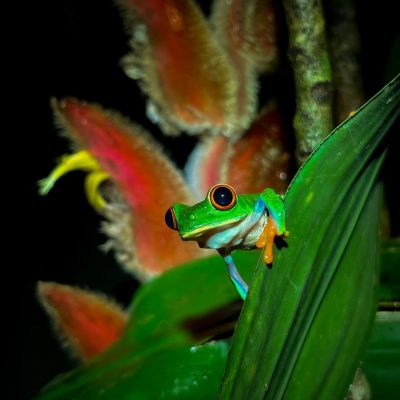
Discover the magnificent nocturnal world of the rainforest. Through a gentle 1.5-hour walk, observe wildlife such as frogs, including the famous red-eyed tree frog, nocturnal and diurnal birds, insects that camouflage with the environment in impressive ways, and much more — an experience to live.
View Details & Book
Sloth & Wildlife Tour
Through a guided safari in the rainforest, you can enjoy these beautiful and interesting mammals in their natural habitat, as well as observe other animals such as monkeys, toucans, frogs, and more.
View Details & Book