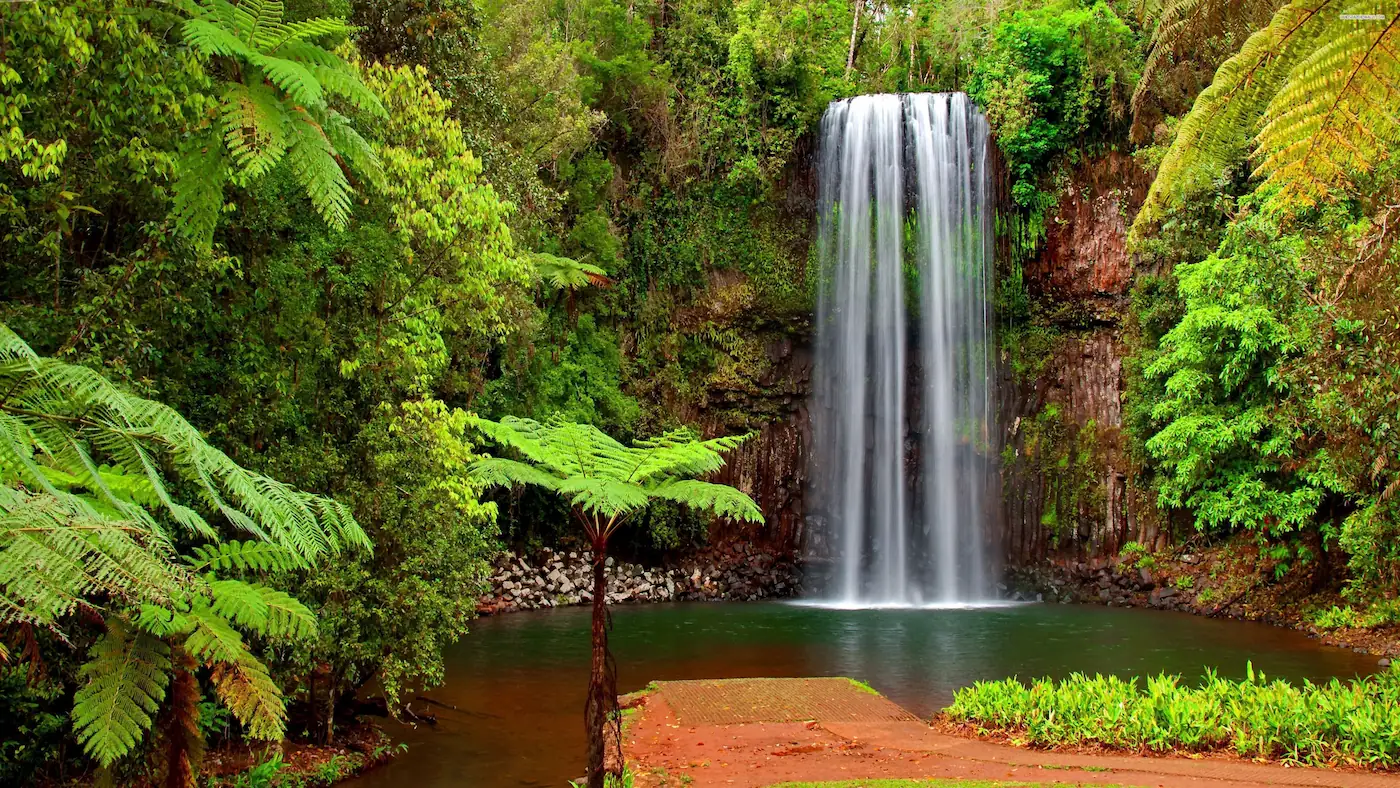
Protected Areas of Costa Rica: Guardians of the World's Most Precious Biodiversity
In a world where tropical forests are disappearing at alarming rates, Costa Rica stands as a beacon of hope. This small Central American nation — roughly the size of West Virginia — has achieved something remarkable: it protects over 25% of its territory in national parks, biological reserves, and wildlife refuges. Even more impressively, forest cover has increased from 21% in 1987 to over 52% today, making Costa Rica one of the only tropical countries to reverse deforestation.
This conservation success didn't happen by accident. It's the result of decades of visionary policy, community engagement, and a national identity deeply tied to the natural world. For visitors exploring Costa Rica's protected areas, every trail walked and every animal observed is a testament to what's possible when a country commits to preserving its natural heritage.
The National Park System: A Conservation Revolution
Costa Rica's national park system was born in 1969 with the creation of the Cabo Blanco Absolute Nature Reserve on the Nicoya Peninsula. Since then, the system has grown to include 30 national parks, 8 biological reserves, 71 wildlife refuges, and numerous other protected categories — covering approximately 26% of the national territory.
The system was largely shaped by the vision of two remarkable individuals: Olof Wessberg and Karen Mogensen, a Swedish-Danish couple who fell in love with Costa Rica's forests and fought to protect them, and Álvaro Ugalde, who as a young park ranger became the driving force behind the expansion of the national park system throughout the 1970s and 1980s.
Arenal Volcano National Park
For visitors based in La Fortuna, Arenal Volcano National Park is the most accessible and iconic protected area. Established in 1991, the park encompasses 12,124 hectares of primary and secondary forest surrounding Costa Rica's youngest and most famous volcano.
The park protects the critical watershed of the Arenal reservoir, which generates a significant portion of Costa Rica's hydroelectric power. It's also a vital biological corridor connecting lowland forests to the Monteverde cloud forest, allowing species like the resplendent quetzal and the three-wattled bellbird to migrate between elevations.
During our Arenal Volcano Hike, visitors walk through the park's 1968 lava flow, witnessing firsthand how nature reclaims even the most devastated landscapes. The contrast between the bare volcanic rock and the surrounding mature forest is a powerful lesson in ecological resilience.
Tenorio Volcano National Park and Rio Celeste
One of Costa Rica's most magical protected areas lies about two hours from La Fortuna: Tenorio Volcano National Park, home to the legendary Rio Celeste. This celestial blue river gets its otherworldly color from a chemical reaction between volcanic minerals — specifically, the collision of two clear rivers carrying different mineral loads creates nanoparticles that scatter blue light.
The 18,402-hectare park protects primary tropical rainforest on the flanks of two volcanic peaks. The 6-kilometer trail to the Celeste waterfall passes through some of the most pristine forest in the country, with opportunities to spot tapirs, monkeys, toucans, and the brilliant red-headed barbet.
Our Rio Celeste Adventure takes visitors through this stunning park, combining a challenging but rewarding hike with world-class nature observation.
Corcovado National Park: The Crown Jewel
National Geographic once called Corcovado "the most biologically intense place on Earth." Located on the remote Osa Peninsula in southwestern Costa Rica, this 42,469-hectare park protects the largest remaining tract of Pacific lowland tropical rainforest in Central America.
Corcovado is home to all four of Costa Rica's monkey species, the country's largest population of scarlet macaws, both species of sloths, jaguars, pumas, ocelots, four species of sea turtles, and an estimated 2.5% of the world's total biodiversity. Walking its trails feels like stepping back in time to a forest that has remained unchanged for millennia.
Monteverde Cloud Forest Reserve
Perched at 1,400 meters in the Tilarán mountain range, Monteverde protects one of the world's most unique ecosystems: the tropical cloud forest. Here, persistent clouds and mist create a cool, perpetually damp environment draped in moss, ferns, and orchids — Monteverde alone has over 500 species of orchids.
The reserve is world-famous as a habitat for the resplendent quetzal and the endangered three-wattled bellbird. Its six ecological zones support more than 400 bird species, 100 mammal species, and an estimated 3,000 plant species.
Manuel Antonio National Park
Despite being the smallest national park in Costa Rica at just 1,983 hectares, Manuel Antonio is one of the most visited and most beloved. The park combines pristine white-sand beaches with tropical forest, creating stunning landscapes where monkeys play in the trees above crystal-clear waters.
The park is one of the easiest places in Costa Rica to see white-faced capuchin monkeys, two-toed sloths, iguanas, and the Central American squirrel monkey — an endangered species found only in this region.
The Payments for Ecosystem Services Program
One of Costa Rica's most innovative conservation tools is the PSA (Pagos por Servicios Ambientales) program, established in 1997. Under this program, landowners receive direct payments from the government for maintaining forest on their properties, recognizing that standing forests provide valuable services: carbon sequestration, watershed protection, biodiversity conservation, and scenic beauty.
The program has been remarkably successful, incentivizing the conservation of over 1.3 million hectares of private land. Many of the reserves we visit on our tours around La Fortuna are private properties participating in this program — proof that conservation and community development can go hand in hand.
How Tourism Supports Conservation
Every visitor who explores Costa Rica's protected areas contributes directly to their preservation. Park entrance fees fund management, research, and community programs. Tourism creates economic incentives for local communities to protect rather than exploit their natural resources.
At Rain Forest Experiences CR, we see this connection every day. The forests that sustain our tours — and the livelihoods of everyone involved — are only possible because Costa Rica chose a different path decades ago. When we guide visitors through the Arenal forest, across hanging bridges in primary forest, or along volcanic trails, we're not just showing them beautiful scenery. We're showing them what happens when a country decides that nature is worth more standing than cut.
Costa Rica proves that even a small country can make a big difference. And every visitor who experiences these protected areas becomes part of that story.
Ready to Experience It Yourself?
Join our expert naturalist guides and discover the incredible wildlife of Arenal up close. Small groups, professional equipment, and unforgettable memories.
See Our Tours BelowRelated Tours
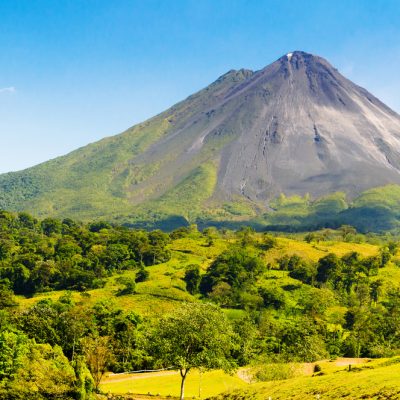
Rio Celeste Adventure
Local legend says that when God painted the sky, he washed his brushes in the Celeste River. Through a 6km hike in a rainforest you can enjoy one of the wonders of Costa Rica — the magical place where the water changes its colors.
View Details & Book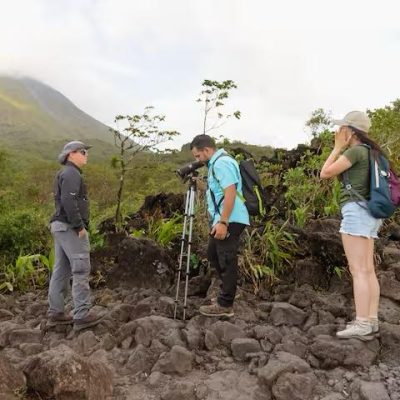
The Best of Arenal — Full Day Combo
In this guided excursion you can discover the 3 main attractions of the Fortuna area: the 1968 Lava Flow hike, La Fortuna Waterfall, and the Hanging Bridges — all in one unforgettable day with a traditional Costa Rican lunch included.
View Details & Book