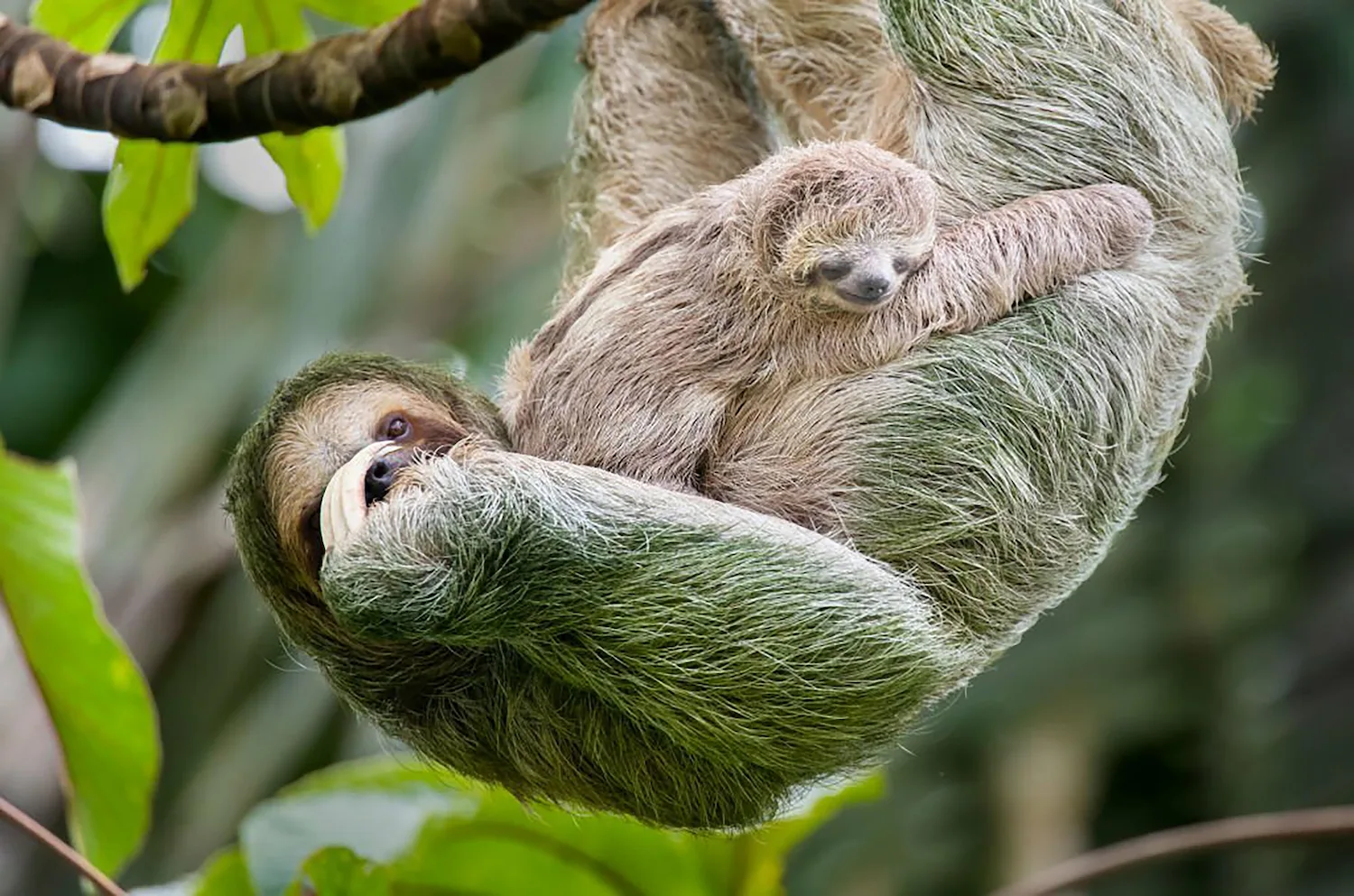
The Arenal Volcano area, nestled near the charming town of La Fortuna, stands as one of Costa Rica's premier destinations for wildlife observation. Among the countless species that inhabit the rainforest, sloths have captured the hearts of visitors worldwide. Their unhurried, deliberate movements, their endearing faces that seem frozen in a perpetual smile, and their remarkable adaptation to life in the tropical canopy make spotting one an experience you will never forget.
Yet despite their popularity, many visitors arrive without knowing where to look or how to distinguish a sloth from the tangle of branches and leaves that surround it. This guide shares everything you need to know about finding sloths in the Arenal area, including practical tips that will significantly boost your chances of a sighting.
What Sloth Species Live in Arenal?
The forests surrounding Arenal Volcano National Park are home to both of Costa Rica's sloth species. While six sloth species exist across the Americas, only these two inhabit the country — and both can be found right here in the Arenal region.
Three-Toed Sloth
The three-toed sloth is the species you are most likely to encounter. Recognizable by its rounded face and what appears to be a gentle, permanent smile, this sloth spends the vast majority of its day motionless in the treetops. It can sleep up to 15 hours daily in intermittent naps, making patience essential when trying to spot one among the branches.
Hoffmann's Two-Toed Sloth
Hoffmann's two-toed sloth presents a greater challenge for observers due to its predominantly nocturnal habits. During daylight hours, it tends to tuck itself deep within dense foliage, blending seamlessly with its surroundings. However, guided night walks and twilight tours offer excellent opportunities to observe this elusive species in action.
Where to See Sloths in Arenal
Several areas around La Fortuna provide ideal conditions for sloth sightings. Knowing where to focus your search makes all the difference.
1. Rainforest Trails
Secondary forests and areas with younger trees are prime sloth territory because they offer an abundance of tender leaves — the sloth's preferred diet. Certain trails within Arenal Volcano National Park pass through zones where sloths are regularly spotted, particularly in and around cecropia trees. These distinctive trees are easy to identify thanks to their pale, slender trunks and large, hand-shaped leaves, and they serve as a reliable beacon for sloth seekers.
2. Private Reserves and Nature Trails
Numerous private reserves in the La Fortuna area protect pristine habitats that sloths favor. These properties typically feature secondary forest, biological corridors connecting larger forest patches, stands of cecropia trees, and peaceful trails far from traffic noise. With fewer visitors than the busier national parks, wildlife in these reserves tends to be more relaxed and easier to observe at close range.
3. River Banks and Forest Edges
Sloths frequently appear along forest edges and riverbanks, where a wider variety of tree species creates a richer food supply. Keep a watchful eye along roadsides as well — it is surprisingly common to spot these incredible animals in trees bordering the highway. Throughout the Arenal region, natural corridors link fragmented patches of forest, enabling sloths to travel slowly from tree to tree without ever needing to descend to the ground.
How to Spot Sloths in the Forest
Despite their lack of speed, sloths can be remarkably difficult to detect. Their greenish-tinged fur and compact, rounded body shape blend almost perfectly into the canopy. Here are the techniques that experienced naturalist guides rely on every day.
1. Scan the Cecropia Trees First
Sloths have a well-documented preference for cecropia leaves. Whenever you spot one of these distinctive trees, take a moment to carefully examine the upper branches. A sloth at rest often resembles nothing more than a dark lump or a dense clump of leaves — until you notice the subtle curve of a claw or the outline of a small, round face.
2. Bring Binoculars
Many sloths position themselves 20 meters or more above the forest floor. Without binoculars, they remain invisible blurs lost in the canopy. A good pair of optics transforms a vague shape into a clearly identifiable animal and turns a frustrating search into a rewarding discovery.
3. Scan the Canopy Slowly and Methodically
Seasoned guides know that searching for movement is the wrong approach with sloths. Instead, they scan the treetops for shapes that break the natural pattern of branches — dark patches that seem too round, claws draped over a limb, or the telltale circular outline of a sloth's face peering down from above.
4. Hire a Naturalist Guide
A trained local guide can detect wildlife that the untrained eye would walk right past. Beyond sloths, a knowledgeable guide will point out monkeys, toucans, vibrant frogs, camouflaged snakes, and basking iguanas — transforming a simple forest walk into a rich, immersive wildlife experience.
Best Times to See Sloths
While sloths can technically be observed at any hour, certain windows offer noticeably better odds.
Early Morning
Between 6:00 and 9:00 AM the forest pulses with activity. The soft morning light illuminates the canopy from below, making it far easier to scan the treetops and pick out the rounded silhouettes of resting sloths.
Late Afternoon
From roughly 3:30 to 5:30 PM, some sloths begin to stir as they prepare for their evening feeding. These subtle movements — a slow reach for a nearby branch, a gentle repositioning — can reveal animals that spent the entire afternoon hidden in plain sight.
An Unforgettable Encounter in the Tropical Forest
Spotting a sloth in its natural habitat ranks among the most magical moments a visitor to Costa Rica can experience. The forests that blanket the slopes around Arenal Volcano harbor extraordinary biodiversity, and every walk through the canopy holds the promise of a new discovery — a flash of tropical color overhead, a rustle in the undergrowth, or the quiet stillness of a sloth gazing down from the branches.
With patience, sharp eyes, and the guidance of an experienced naturalist, the chances of seeing sloths in the Arenal area are remarkably high. And when you finally lock eyes with one resting peacefully among the leaves, you will understand exactly why this gentle creature has become one of Costa Rica's most beloved symbols.
Ready to Experience It Yourself?
Join our expert naturalist guides and discover the incredible wildlife of Arenal up close. Small groups, professional equipment, and unforgettable memories.
See Our Tours BelowRelated Tours
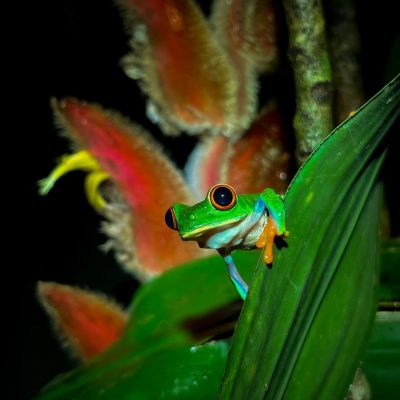
Night Rainforest Walk
Discover the magnificent nocturnal world of the rainforest. Through a gentle 1.5-hour walk, observe wildlife such as frogs, including the famous red-eyed tree frog, nocturnal and diurnal birds, insects that camouflage with the environment in impressive ways, and much more — an experience to live.
View Details & Book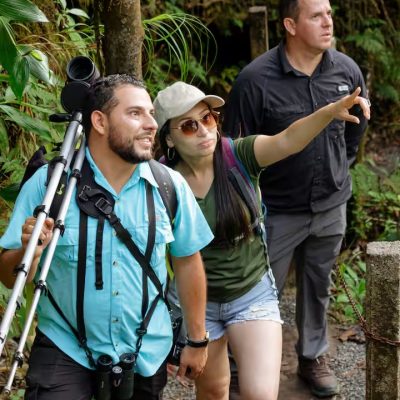
Sloth & Wildlife Tour
Through a guided safari in the rainforest, you can enjoy these beautiful and interesting mammals in their natural habitat, as well as observe other animals such as monkeys, toucans, frogs, and more.
View Details & Book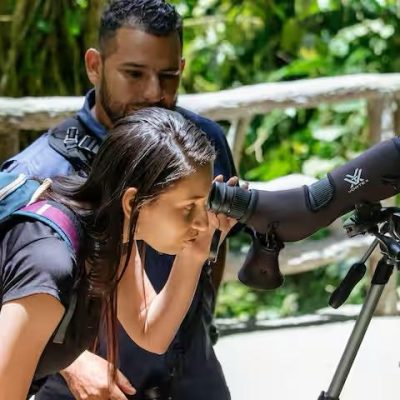
Arenal Hanging Bridges
With more than 250 hectares of forest, the hanging bridges reserve is the perfect place to learn from a naturalist guide about the natural history of this ecosystem. Walk at canopy level across 6 hanging bridges and observe animals such as monkeys, birds, snakes, and much more.
View Details & Book