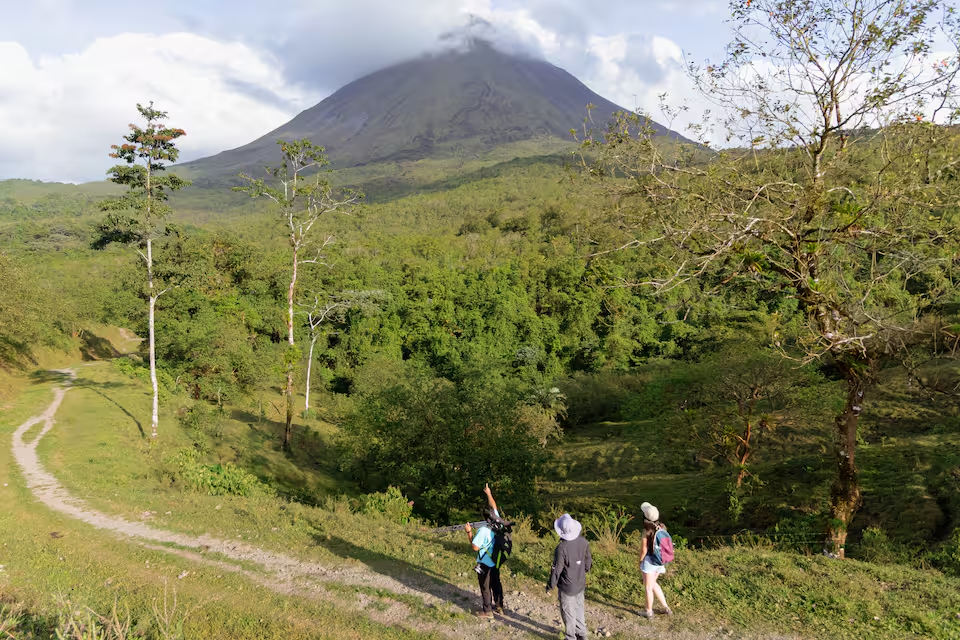
Birdwatching in Arenal: Essential Tips for an Unforgettable Experience
Costa Rica is one of the world's top birdwatching destinations, and the Arenal region is its crown jewel. With over 500 species recorded in the forests, wetlands, and agricultural areas surrounding La Fortuna, this small area holds more bird species than the entire continent of Europe. Whether you're a seasoned lister or picking up binoculars for the first time, Arenal offers unforgettable birding experiences.
After more than 13 years of guiding birdwatching tours in this region, I've learned that successful birding is about more than just showing up with binoculars. It's about understanding the birds' habits, knowing the right places and times, and having the patience to let the forest reveal its secrets. Here are my best tips for making the most of your birdwatching experience in Arenal.
Start Early — Very Early
The golden rule of tropical birding: the early bird catches the bird. The first two hours after dawn — roughly 5:30 to 7:30 AM — are the most productive period of the day. This is when mixed-species flocks move through the canopy, fruiting trees are buzzing with activity, and territorial males are singing at their peak.
On our birdwatching tours, we depart at 5:15 AM specifically to catch this window. The difference between birding at 6 AM and 9 AM is dramatic — you might see three times as many species in the early morning hours.
That said, don't write off the afternoon entirely. From about 2:30 to 5:00 PM, bird activity picks up again as species prepare for the night. Raptors ride afternoon thermals, hummingbirds visit flowers, and frugivores make their last rounds of the day.
The Must-See Species of Arenal
Every birder has their wish list, and Arenal delivers on most of them. Here are some of the species that make this region world-famous:
The keel-billed toucan (Ramphastos sulfuratus) with its rainbow-colored bill is perhaps the most iconic bird of the region. They're social birds, often seen in small groups flying between tall trees in the morning. Their distinctive "krrrk-krrrk" call carries far through the forest.
The resplendent quetzal (Pharomachrus mocinai), while more commonly associated with the cloud forests of Monteverde, can occasionally be found in the higher elevations around Arenal. Spotting one, with its iridescent green plumage and impossibly long tail feathers, is a once-in-a-lifetime experience.
Motmots are a highlight for many visitors. The broad-billed motmot (Electron platyrhynchum) and the rufous motmot (Baryphthengus martii) are regularly seen during our tours. Their distinctive racket-tipped tails — which they swing like pendulums — make them instantly recognizable.
For raptor enthusiasts, Arenal offers excellent opportunities. The ornate hawk-eagle (Spizaetus ornatus), the laughing falcon (Herpetotheres cachinnans), and several species of forest-falcons patrol the skies and forest edges.
Equipment That Makes a Difference
You don't need to spend thousands on equipment, but having the right gear dramatically improves your experience. Here's what I recommend:
Binoculars are essential. A pair with 8x or 10x magnification is ideal for forest birding. Higher magnification may seem appealing, but in the dense understory, a wider field of view (which lower magnification provides) helps you find and track moving birds much faster.
On all our birdwatching tours, we provide professional-grade spotting scopes with 20-60x zoom. These allow guests to see incredible details — the individual barbs on a toucan's feather, the iridescent throat of a hummingbird, the subtle eye ring that distinguishes one flycatcher from another. The scope transforms birding from "I think I saw something green" to "I can see every detail of that bird's face."
Clothing matters more than you might think. Avoid bright colors — especially white and red — as they alert birds to your presence. Earth tones (olive, brown, khaki) help you blend into the forest. Long sleeves and pants also protect against insects and thorny vegetation.
Habitat Diversity Is Your Friend
One of Arenal's greatest advantages for birding is its diversity of habitats within a small area. In a single morning, you can visit:
Forest interior, where you'll find antbirds, woodcreepers, and mixed-species flocks. The hanging bridges reserve is excellent for this, as the elevated walkways put you at canopy level where the action is.
Forest edges and gaps, which attract tanagers, flycatchers, and seedeaters that prefer the boundary between forest and open areas. These transition zones are often the most species-rich spots.
Rivers and streams, where you can spot the American dipper, green kingfisher, and the striking sunbittern with its spectacular wing display.
Open areas and gardens, which are paradises for hummingbirds, tanagers, and euphonias. Many lodges around La Fortuna maintain feeding stations that attract incredible diversity.
Patience and Pishing
Tropical birding requires a different approach than birding in temperate regions. Many tropical species are shy, skulking, and well-camouflaged. Patience is not just a virtue — it's a necessity.
One technique that works remarkably well is called "pishing" — making soft, repetitive "psh-psh-psh" sounds that mimic the alarm calls of small birds. This often attracts curious individuals from surrounding vegetation, giving you brief but excellent views. Your guide will know when and how to use this technique effectively.
Another powerful approach is simply standing still. In the rainforest, movement is what gives you away. If you remain motionless for 10 to 15 minutes in a productive spot, the forest comes alive around you as birds resume their normal activities, often approaching much closer than they would if you were walking.
Recording Your Sightings
I always encourage guests to keep a list of species seen during the tour. Not only does it enhance the experience, but it also contributes to citizen science. Apps like eBird allow you to submit your observations, contributing to a global database that scientists use to track bird populations and migration patterns.
At Rain Forest Experiences CR, we can help you identify every species we encounter. After more than a decade of birding in this region, we know the local species intimately — their calls, their habits, their preferred perches. Even if you can't see a bird, we can often identify it by its song, adding species to your list that you might otherwise miss.
The birds of Arenal are waiting. Bring your curiosity, wake up early, and prepare to be amazed by one of the richest bird communities on the planet.
Ready to Experience It Yourself?
Join our expert naturalist guides and discover the incredible wildlife of Arenal up close. Small groups, professional equipment, and unforgettable memories.
See Our Tours BelowRelated Tours
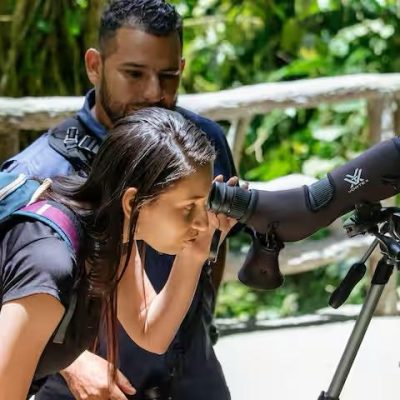
Arenal Hanging Bridges
With more than 250 hectares of forest, the hanging bridges reserve is the perfect place to learn from a naturalist guide about the natural history of this ecosystem. Walk at canopy level across 6 hanging bridges and observe animals such as monkeys, birds, snakes, and much more.
View Details & Book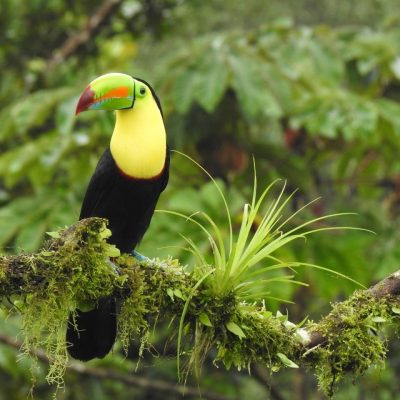
Birdwatching Tour
Costa Rica is known for its great biodiversity, and with more than 900 bird species, it's paradise for bird lovers. On a walk through the foothills of Arenal Volcano in a private reserve, you can observe a great number of birds including toucans, tanagers, warblers, trogons, motmots, and many more colorful species.
View Details & Book